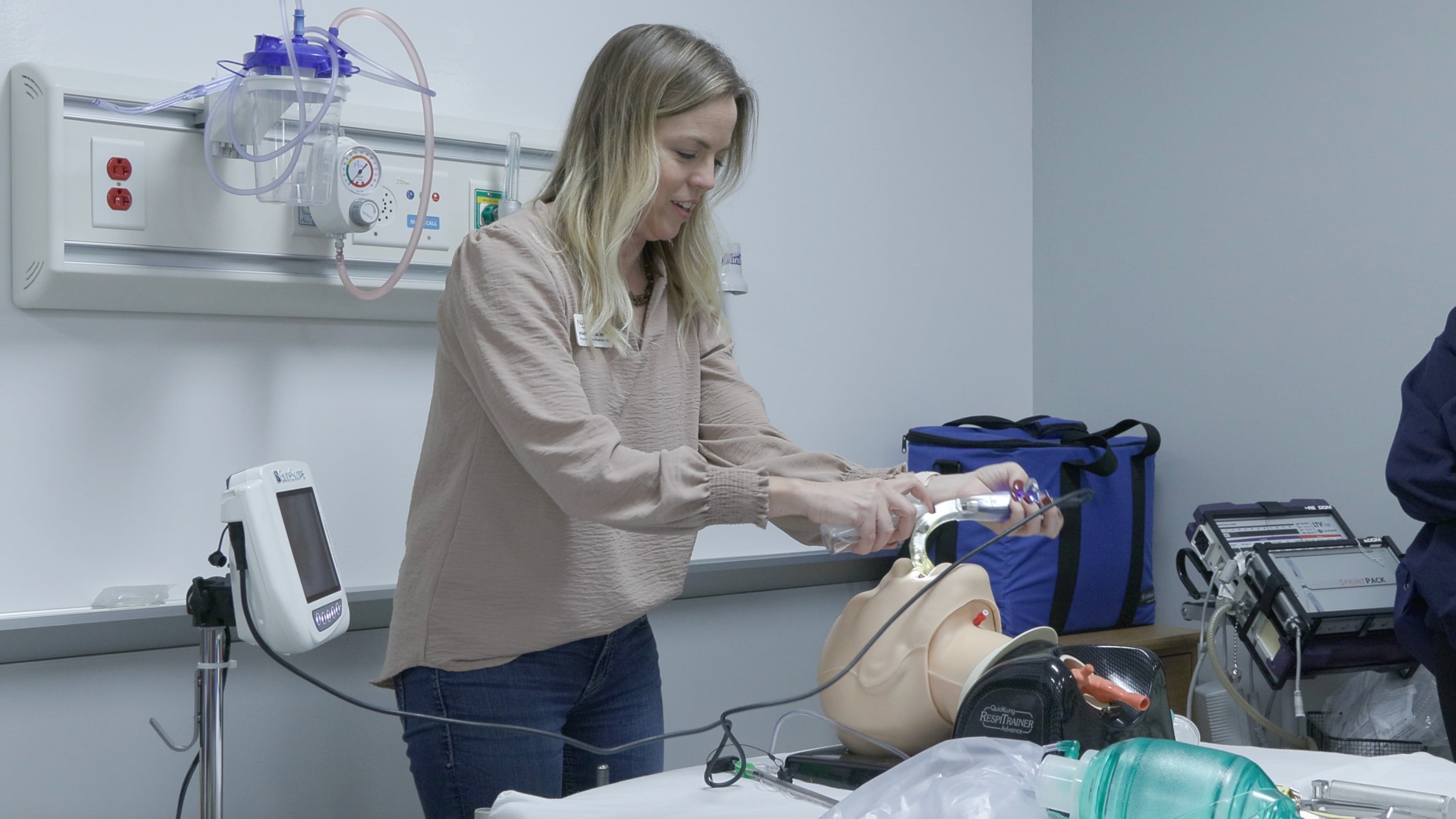
Key Takeaways
- Newman University’s respiratory therapy program achieves a 90%+ RRT credentialing success rate, significantly higher than typical program outcomes
- Starting January 1, 2027, the NBRC will require all RRT candidates to graduate from CoARC-accredited programs, eliminating alternative pathways
- Respiratory therapists in Kansas earn competitive salaries, with high job placement success for Newman graduates
- CoARC accreditation ensures graduates meet rigorous educational standards required for national credentialing exams and state licensure
For students considering a career in respiratory therapy, choosing the right educational program can make the difference between struggling to pass credentialing exams and launching a successful healthcare career. The Commission on Accreditation for Respiratory Care (CoARC) sets the gold standard for respiratory therapy education, and understanding what makes certain programs stand out becomes vital for prospective students.
Newman’s 90%+ RRT Success Rates Outperform Typical Outcomes
Newman University’s respiratory therapy program consistently demonstrates exceptional outcomes that surpass typical benchmarks. While many CoARC-accredited programs show varying success rates, Newman has achieved and maintained success rates of 90% or higher in recent award years.
The program’s success becomes even more impressive when examining specific exam performance. Recent NBRC data reveals that TMC high-cut pass rates for new candidates have been challenging, while Clinical Simulation Examination (CSE) pass rates have also presented difficulties for many students. Newman graduates consistently outperform these typical outcomes, earning the program CoARC’s Distinguished RRT Credentialing Success Award for maintaining RRT success rates of 90% or above.
According to program director Stacy Fox, “100% of our students can get a full-time job here in the Wichita community every year. Really two to three months or more before they graduate, they know that they have a full-time job waiting for them.” This track record of success reflects the program’s thorough preparation and strong clinical partnerships. Newman University’s respiratory therapy program in Wichita has built a reputation for producing highly qualified graduates who excel in both credentialing exams and professional practice.
Why CoARC Accreditation Matters for Your Future
CoARC accreditation serves as the foundation for a successful respiratory therapy career. As the sole programmatic accrediting agency for respiratory care education programs in the United States, CoARC ensures that programs meet rigorous educational standards that prepare graduates for national credentialing exams and state licensure requirements.
NBRC Exam Eligibility Requirements
Graduation from a CoARC-accredited program is mandatory for eligibility to take the National Board for Respiratory Care (NBRC) examinations. The NBRC offers two primary credentials: the Certified Respiratory Therapist (CRT) and the Registered Respiratory Therapist (RRT). Students must first pass the Therapist Multiple-Choice (TMC) examination at the high cut score to become eligible for the Clinical Simulation Examination (CSE), which leads to RRT certification.
The pathway to RRT certification requires strategic preparation. Students have a three-year window from earning their CRT to passing the CSE for the RRT credential. Missing this window means retaking the TMC at the high cut score before becoming eligible again.
State Licensure Prerequisites
Most states, including Kansas, require graduation from a CoARC-accredited program for respiratory therapist licensure. In Kansas, earning the CRT credential partially satisfies state licensure requirements, while the RRT positions graduates as the highest-credentialed respiratory therapists in the state. Kansas also offers pathways for new graduates who have met educational requirements.
Upcoming RRT Pathway Changes in 2027
A significant policy change takes effect January 1, 2027, when the NBRC eliminates its older “CRT-to-Registry” alternate pathway. After this date, anyone seeking the RRT credential must hold a degree from a CoARC-accredited program. This change makes graduation from accredited programs like Newman’s even more strategically valuable for students planning their respiratory therapy careers.
Newman’s Distinguished Award-Winning Program Details
Newman University’s respiratory therapy program has earned recognition through CoARC’s Distinguished RRT Credentialing Success Award, which requires programs to demonstrate RRT credentialing success of 90% or above while meeting or exceeding CoARC thresholds for TMC high cut score success and program retention.
Program Structure and Timeline
The program operates as an associate degree program accepting 20 students annually with a single fall start date. The accelerated timeline spans three semesters: fall, spring, and fall, allowing students to complete their degree in just 16 months. Students begin in August and graduate the following December, positioned to enter the workforce quickly.
The curriculum covers respiratory care topics, from basic cardiopulmonary anatomy and physiology to advanced mechanical ventilation management. Students learn to care for patients across all age groups, from neonatal to geriatric populations, in various healthcare settings including intensive care units, emergency departments, and specialized respiratory care facilities.
Clinical Training in Wichita Healthcare Facilities
Newman’s clinical training program uses partnerships with major Wichita healthcare facilities, providing students with hands-on experience in real-world settings. Clinical rotations expose students to diverse patient populations and respiratory conditions, from common ailments like asthma and COPD to complex cases requiring mechanical ventilation and advanced life support.
The program’s clinical sites include major hospitals, rehabilitation centers, and specialized respiratory care facilities throughout the Wichita area. Students gain experience in critical care, emergency medicine, pediatrics, neonatal care, and outpatient settings, ensuring thorough preparation for their future careers.
Career Outcomes and Salary Expectations
The respiratory therapy profession offers strong job security and competitive compensation, with the Bureau of Labor Statistics projecting 13% growth from 2022 to 2032—much faster than average for all occupations.
Job Placement Success at Newman
Newman University achieves high job placement success for respiratory therapy graduates, with most students securing employment opportunities months before graduation. The program’s strong relationships with area healthcare providers create a pipeline of employment opportunities for qualified graduates.
Career paths for respiratory therapists extend beyond traditional hospital settings. Graduates work in home healthcare, nursing facilities, physician offices, sleep disorder centers, rehabilitation centers, transport teams, and diagnostic laboratories. Many graduates begin in acute care settings before specializing in areas like pediatric care, neonatal care, sleep medicine, or pulmonary diagnostics.
Kansas Salaries: Competitive Compensation
Respiratory therapists in Kansas earn competitive salaries that vary by experience, location, and specialization. Entry-level positions in the Wichita area offer competitive starting wages, with experienced professionals earning significantly more based on their expertise and work setting.
National salary data shows median pay for respiratory therapists ranging from $77,960 to $80,450 per year, with experienced professionals in specialized settings earning higher compensation. Salaries vary by geographic region, healthcare setting, and level of specialization, with critical care and neonatal specialists typically commanding higher compensation.
Career Advancement Opportunities
The respiratory therapy field offers multiple advancement pathways. Experienced therapists can move into specialized roles in critical care, pediatric or neonatal care, sleep medicine, pulmonary diagnostics, education, management, or equipment sales. Many pursue specialty credentials after earning the RRT, which can expand job options and earning potential.
Advanced practice opportunities include pursuing bachelor’s degrees for leadership and educational roles, with many hospitals offering tuition assistance for continuing education. Some respiratory therapists transition into roles as clinical specialists, department supervisors, or program directors in healthcare facilities or educational institutions.
Application Requirements and Deadlines
Newman University’s respiratory therapy program maintains selective admission standards to ensure student success and maintain program quality.
Admission Criteria and Timeline
The application process opens in February for fall admission, with students needing to complete prerequisite courses before program entry. The program requires specific prerequisite courses, which include anatomy and physiology, chemistry, and other foundational subjects.
Prospective students undergo a competitive selection process that may include interviews and academic record review. The program’s limited enrollment of 20 students per year ensures personalized attention and optimal clinical experiences but requires early application submission for consideration.
Financial Aid and Scholarship Options
Students may qualify for various financial aid options, including the Kansas Promise Scholarship, available to respiratory care students as part of the Mental and Physical Healthcare fields category. This last-dollar scholarship requires recipients to live and work in Kansas for two years after graduation, making it ideal for students planning to build careers in the state.
Additional financial aid opportunities include federal grants, loans, and work-study programs. Newman’s financial aid office assists students in understanding available options and ensuring proper application procedures for maximum funding opportunities.
Start Your Path to RRT Success at Newman University
Choosing the right respiratory therapy program sets the foundation for a successful healthcare career. Newman University’s proven track record of 90%+ RRT success rates, high job placement rates, and strong clinical partnerships provides students with exceptional preparation for the changing landscape of respiratory care.
With upcoming NBRC policy changes requiring CoARC-accredited program graduation for RRT eligibility, the value of programs like Newman’s continues to grow. The combination of accelerated program completion, thorough clinical training, and strong employment outcomes makes Newman an attractive option for students serious about respiratory therapy careers.
The respiratory therapy profession offers job security, competitive compensation, and the opportunity to make a meaningful impact on patient care across diverse healthcare settings. For students ready to begin this rewarding career path, Newman University’s program provides the education, training, and support needed to achieve professional success.
Learn more about Newman University’s distinguished respiratory therapy program and discover how their education prepares students for successful careers in this growing healthcare field by visiting Newman University’s website.
Newman University
3100 McCormick
Wichita
Kansas
67213
United States