The Effect of Auto Collision Repair on Your Car’s Resale Value in Indianapolis
Indianapolis, United States – March 9, 2026 / Tom Wood Collision /
Indianapolis, IN – Tom Wood Collision Center is addressing a common concern among Indianapolis vehicle owners: how post-accident repairs can influence trade-in value and private sale negotiations long after the vehicle is back on the road. The facility emphasizes manufacturer-certified collision repairs, adherence to OEM procedures, and accurate calibration of modern safety technology as factors that shape how a vehicle is evaluated in the resale market.

Accident History and Its Impact on Vehicle Resale
When a vehicle is involved in an accident, the consequences often extend beyond visible body damage. Once the incident is reported, it becomes part of the vehicle’s permanent history through services such as Carfax and AutoCheck. Dealerships, appraisers, and private buyers routinely review these reports before making an offer.
That documented history can influence trade in valuations and private sale negotiations. Industry pricing guides, including Kelley Blue Book, indicate that vehicles with reported accidents typically carry lower market values than comparable models without damage history, even when repairs return the vehicle to pre-accident condition.
Diminished Value and Its Effect on Resale
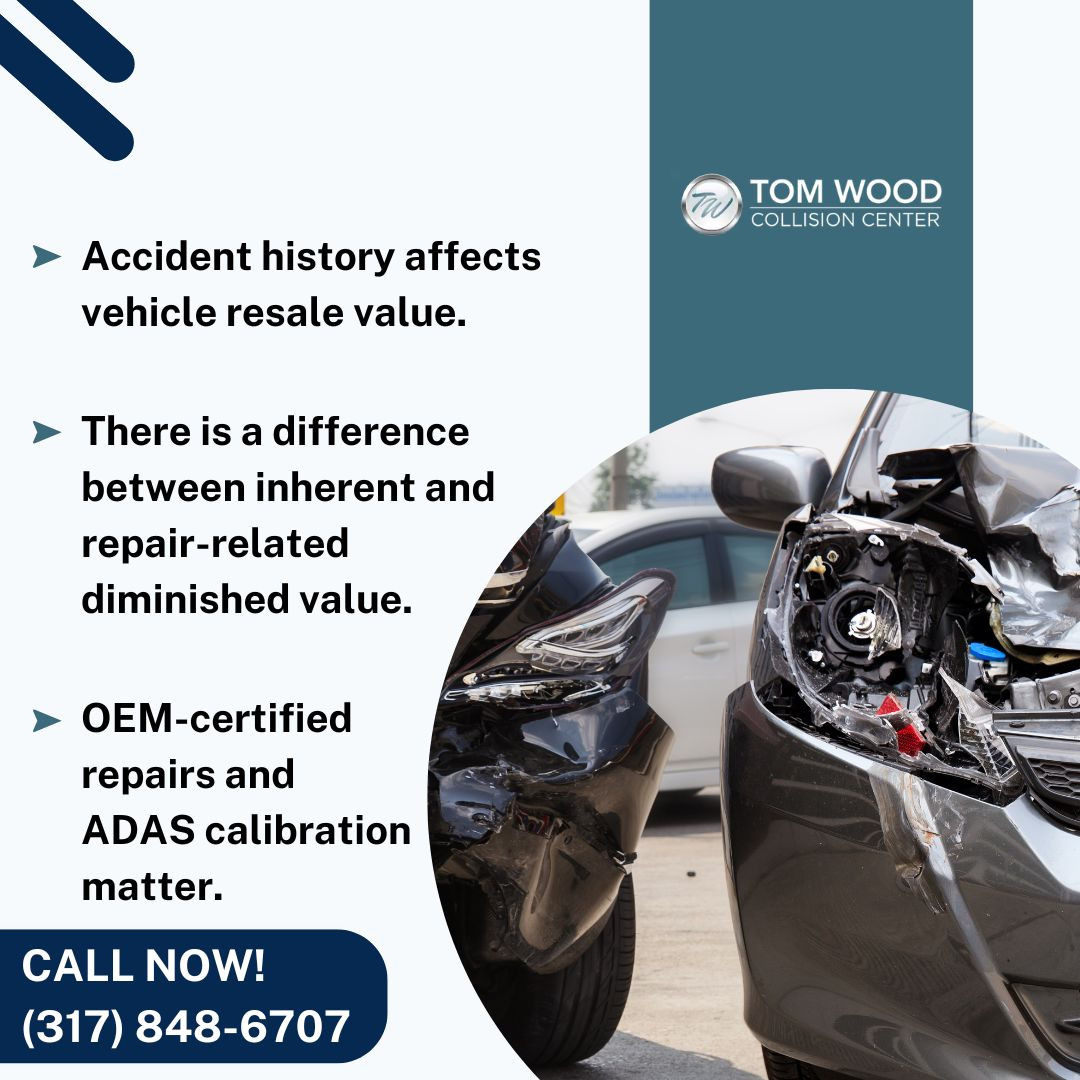
Diminished value represents the difference between a vehicle’s market value before an accident and its value after repairs are completed. While some reduction is tied to the accident record itself, additional value loss can result from poor-quality repairs.
-
Inherent diminished value occurs simply because an accident appears on a vehicle history report. Buyers and dealers factor that record into pricing decisions, regardless of how well the vehicle appears to have been repaired.
-
Repair-related diminished value stems from substandard workmanship. Mismatched paint, uneven panel gaps, and structural repairs that fall outside factory tolerances can be identified during inspections. These visible or measurable flaws often lead to lower resale offers.
Key Repair Factors That Affect Vehicle Trade-In Value
OEM Repair Procedures and Manufacturer Certifications
Modern vehicles are engineered with specific materials, welding techniques, and structural tolerances defined by their manufacturers. Original Equipment Manufacturer, or OEM, repair procedures outline the exact methods required to restore a vehicle after a collision.
Manufacturer certifications require brand-specific training, approved equipment, and ongoing audits. Repairs performed under these certifications follow manufacturer guidelines rather than general repair approaches. Facilities that maintain these credentials are evaluated on their ability to meet strict repair standards set by the automaker.
Documented OEM Compliance
Documentation confirming adherence to OEM procedures plays a direct role in resale conversations. When owners present repair records that reference manufacturer standards, buyers and appraisers have clear evidence that the vehicle was restored according to factory specifications. This level of documentation supports stronger inspection outcomes and more informed trade in evaluations.
Advanced Driver Assistance Systems and Post-Repair Calibration
Most late-model vehicles have Advanced Driver Assistance Systems, commonly referred to as ADAS. These systems include automatic emergency braking, forward collision warning, blind spot monitoring, and lane departure warning. Cameras and radar sensors must be positioned within precise tolerances to operate correctly.
Importance of ADAS Calibration
After a collision, even minor shifts in body panels or structural components can affect sensor alignment. ADAS calibration restores these systems to manufacturer specifications once repairs are completed. Without calibration records, gaps may appear in the documented repair history, which buyers and dealerships often review closely.
Repair Documentation and Warranty Coverage
Thorough documentation strengthens a vehicle’s resale position. Itemized repair invoices, diagnostic scan results, OEM procedure references, and calibration records provide tangible evidence of the work performed.
Warranty coverage on completed auto collision repairs can also influence buyer confidence. When a facility stands behind its workmanship, it offers additional reassurance during resale discussions and inspections.
Certified Collision Repair in Indianapolis at Tom Wood Collision Center
Tom Wood Collision Center has served the Indianapolis community since 2012. The facility holds certifications from more than 20 manufacturers, including Toyota, Honda, Ford, Lexus, Porsche, Volvo, Jaguar, Land Rover, and General Motors.
Tom Wood Collision Center performs pre-repair and post-repair diagnostic scans, completes required ADAS calibrations, and provides detailed repair documentation for each vehicle serviced. All completed repairs are backed by a limited lifetime warranty for as long as the customer owns the vehicle.
Technicians maintain ongoing training through I-CAR and ASE programs, supporting the facility’s commitment to collision repair in Indianapolis that aligns with manufacturer standards.

Book Your Auto Collision Repair Appointment in Indianapolis
Tom Wood Collision Center continues to serve Indianapolis drivers with collision repair grounded in manufacturer repair standards, advanced diagnostic technology, and documented workmanship. Drivers searching for auto collision repair near them can contact Tom Wood Collision Center at (317) 848-6707 to schedule an estimate and learn more about certified collision repair services in Indianapolis.

Contact Information:
Tom Wood Collision
9727 Bauer Dr E
Indianapolis, IN 46280
United States
Joshua Piccione
(317) 848-6707
https://www.tomwoodcollision.com/


Original Source: https://www.tomwoodcollision.com/blog/2026/march/4/the-effect-of-auto-collision-repair-on-your-cars-resale-value-in-indianapolis.htm