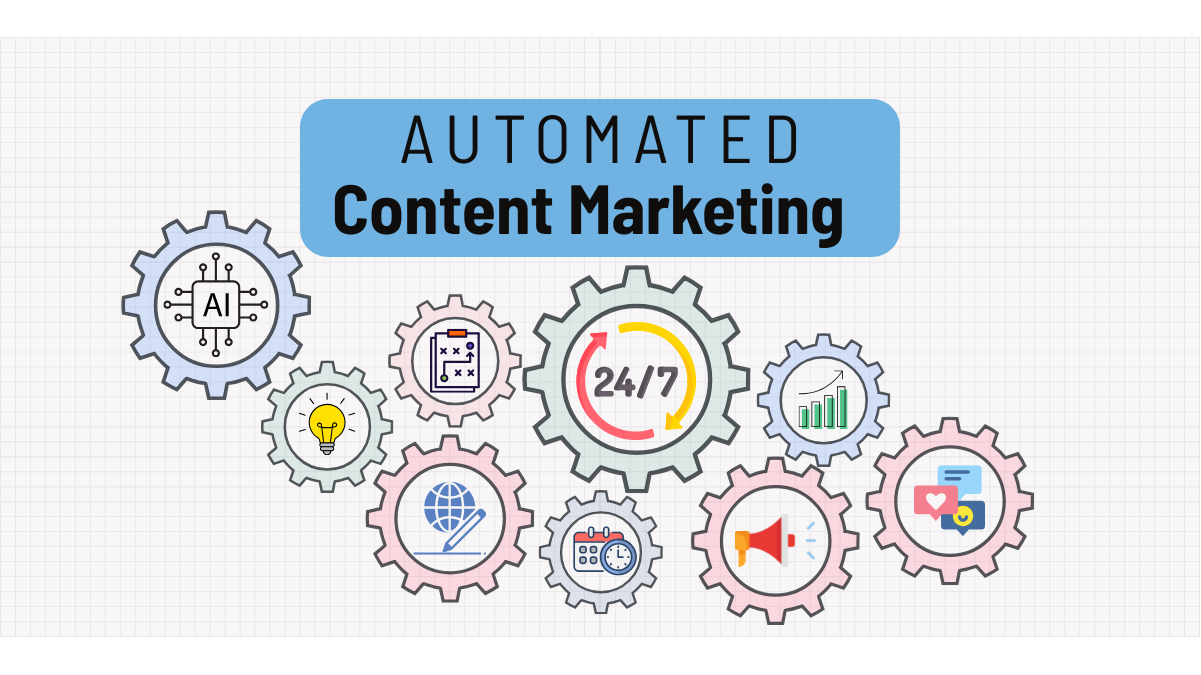
Marketing teams face an exhausting reality: too much content to create, too many channels to manage, and never enough time. Manual workflows can’t keep pace with audience expectations anymore. AI-driven content marketing automation handles repetitive tasks while freeing your team for strategy and creativity.
Companies exploring automated content marketing strategies see major improvements in productivity and consistency without sacrificing quality. Here’s what makes automation work and how to avoid the mistakes that waste time and money.
Why Manual Content Marketing Holds Your Business Back
Managing content manually creates bottlenecks that slow down your entire marketing operation and limit what your team accomplishes each week. Writers wait for briefs, editors scramble to review everything before deadlines, and distribution happens inconsistently because someone forgot or got overwhelmed. Your publishing schedule falls apart when team members take vacation, get sick, or simply feel buried by the volume of work.
Inconsistent posting damages your brand because audiences expect regular content, and search engines reward websites that publish reliably over time. Manual workflows waste hours on tasks like reformatting content for different platforms, copying product descriptions, and creating weekly performance reports. Content fatigue becomes inevitable when your team manually handles every aspect of creation, distribution, and analysis without any systematic support.
The biggest loss comes from missed opportunities because your team stays too busy with routine tasks to experiment with new formats. Personalization remains impossible at scale when you can’t automatically segment audiences or tailor messages based on behavior and preferences. Your marketing stays generic instead of connecting with specific customer needs and solving their actual problems.
Start With Clear Goals, Not Fancy Tools
Successful automation starts with defining exactly what problems you need to solve, rather than just adopting tools because competitors use them. Think about whether you want to save time, improve publishing consistency, enhance lead nurturing, scale content production, or achieve better results. Your goals determine which automation features actually matter for your business and which ones just add unnecessary complexity to workflows.
Teams focused on consistency need scheduling and editorial calendar tools, while businesses prioritizing personalization require segmentation and behavioral triggering capabilities instead. Starting with specific, measurable objectives helps you evaluate whether automation delivers real value or just creates more work managing systems. About 58% of marketers already use automation in their strategies because they identified clear problems that needed solving first.
Pick Tools That Actually Fit Your Workflow
The content automation market offers hundreds of platforms promising to revolutionize your marketing, but most businesses only need a few tools. Understanding different tool categories helps you build a practical automation stack without overspending on features you’ll never use daily. Marketing automation platforms manage multi-channel campaigns by scheduling posts, sending emails based on triggers, tracking engagement, and personalizing content delivery. Systems like HubSpot, ActiveCampaign, and Mailchimp handle the coordination work that traditionally required dedicated staff managing spreadsheets and remembering schedules.
Content creation tools generate first drafts, product descriptions, social media captions, and meta descriptions that speed up writing without replacing creativity. These platforms work best for repetitive content like FAQs, product listings, and simple updates rather than strategic thought leadership requiring expertise.
Workflow management systems organize content production from initial ideas through final publication by assigning tasks, tracking progress, and managing approvals. These tools become essential when three or more people contribute to content because they eliminate confusion about ownership and deadlines.
Distribution platforms push finished content across multiple channels simultaneously and schedule posts for optimal engagement times without requiring manual intervention. Tools like Buffer and Hootsuite prevent the problem where great content sits unpublished because someone forgot to share it.
Analytics and reporting tools automate data collection and provide insights into content performance, audience behavior, and return on investment automatically. These solutions eliminate the need to manually compile reports from multiple platforms every week or month unnecessarily.
Build Your System One Step At A Time
Implementation works best when you automate one process completely before moving to the next challenge, rather than trying everything simultaneously. Start by mapping your current content workflow from initial assignment through publication so you can identify which steps consume time. Select automation tools that integrate with systems you already use instead of forcing your team to learn entirely new platforms.
Most businesses find success beginning with content distribution automation because it delivers immediate time savings without requiring complex setup. Configure your first automated workflow by connecting your content calendar to scheduling tools so finished pieces publish automatically at times. Test this system thoroughly with a few pieces before expanding because catching problems early prevents larger issues later on.
Add automated data collection next so you can track content performance without manually compiling reports from multiple platforms every week. Systems that automatically gather metrics on engagement, traffic, conversions, and audience behavior provide insights that inform better content decisions instantly. Gradually expand automation to additional processes like lead nurturing sequences, social media monitoring, and performance alerting as your team gets comfortable.
This measured approach prevents overwhelming people with too many changes at once while building confidence through visible wins that demonstrate value. Automation tools enable marketers to enhance their processes, improve productivity, and get better outcomes without dramatically increasing budgets or headcount.
Know What Automation Can’t Do For You
Understanding automation’s limitations prevents disappointment and helps you deploy it effectively where it truly adds value rather than expecting miracles. Automated systems excel at repetitive, rules-based tasks like scheduling posts, formatting content, personalizing email greetings, and maintaining consistent publishing schedules. These tools struggle with strategic thinking, understanding nuanced context, creating genuinely original insights, and making editorial judgments about tone or sensitivity.
Content automation generates adequate drafts for straightforward topics but produces generic material that lacks the distinctive voice, making the content valuable. The best results come from combining automation’s efficiency with human creativity and judgment rather than trying to eliminate people entirely. Let automation handle distribution, scheduling, basic formatting, and data collection while reserving human effort for strategy development and storytelling.
Search engines like Google can flag content produced with automation software as spam if you’re not carefully reviewing everything. If your content becomes repetitive and duplicated, your website can appear forced and spammy to gain more backlinks quickly. Marketing automation can minimize human errors by examining customer data and monitoring user actions across different channels and touchpoints. Despite advancements in technology and machine learning, automation can sometimes make your marketing campaigns seem overly calculated and impersonal.
Track The Right Numbers To Improve Results
Monitor specific metrics that connect directly to your automation goals instead of drowning in data that looks impressive but doesn’t inform decisions. Track time saved on routine tasks, improvements in publishing consistency, increases in content output without quality decline, and growth in engagement. Compare performance before and after implementing automation to understand its true impact rather than assuming everything improved just because money was spent.
Look for unexpected problems like decreased engagement from over-automated content that feels robotic, audience fatigue from too-frequent posting, or team frustration. Adjust your automation rules regularly based on performance data and team feedback because what works initially might need refinement later. Successful automation requires ongoing optimization rather than set-it-and-forget-it approaches that gradually become outdated or misaligned with current business objectives.
Nearly half of agencies use their automation platforms to measure and prove return on investment because the data demonstrates value clearly. Measuring the return on investment of content marketing automation is essential for maximizing its effectiveness and justifying the investment properly.
Get Expert Help When You Need It
Professional implementation support accelerates your automation setup while avoiding common mistakes that derail projects and waste months of effort unnecessarily. Specialists understand technical integration challenges, consent management requirements, identity matching across channels, and workflow design principles that maximize automation benefits. These experts provide migration plans that maintain data continuity and prevent the loss of valuable historical information during transitions to new systems.
They also configure automation rules properly from the start, so you avoid situations where automated content gets published at times. Expert guidance helps you navigate the transition without disrupting current operations or creating confusion that undermines adoption across teams. Implementation partners understand common pitfalls and provide proven strategies that protect your analytics and content operations for years ahead.
Make The Move Now Before Falling Behind
Content marketing automation transforms overwhelming workflows into manageable systems that deliver consistent results without burning out your team or sacrificing quality. Begin by selecting one high-impact process to automate completely rather than attempting to overhaul everything at once and creating chaos.
Most businesses find immediate value starting with distribution automation or lead nurturing sequences because these deliver visible time savings within weeks. Measure the results carefully, gather team feedback honestly, then explore resources on automated content marketing as you identify additional opportunities where automation solves problems your team faces daily.
WMappDigital
30 N Gould St. Ste R
Sheridan
Wyoming
82801
United States